





Economics

Why capitalism is fundamentally undemocratic
 Have you participated in a project or program funded by Stiftung Mercator? Are you currently involved in one, or part of our team or partner network?
Then we warmly invite you to become part of the MercatorGlobe Community!
Have you participated in a project or program funded by Stiftung Mercator? Are you currently involved in one, or part of our team or partner network?
Then we warmly invite you to become part of the MercatorGlobe Community!
Welcome to our community network!
Sign Up for More
 In an article entitled The European Union’s External Imbalances: Past, Future, and Policy (Bruegel, Working Paper 07/2026) a group of authors led by Jeromin Zettelmeyer, director of Bruegel, an influential Brussels think tank, and Zsolt Darvas, point to a disturbing situation: for more than a decade, the European Union has had a persistent current account surplus of around 3 percent of GDP.
The EU’s Chronic Surplus: Handsome Figures Concealing a Deep Structural Decline
In an article entitled The European Union’s External Imbalances: Past, Future, and Policy (Bruegel, Working Paper 07/2026) a group of authors led by Jeromin Zettelmeyer, director of Bruegel, an influential Brussels think tank, and Zsolt Darvas, point to a disturbing situation: for more than a decade, the European Union has had a persistent current account surplus of around 3 percent of GDP.
The EU’s Chronic Surplus: Handsome Figures Concealing a Deep Structural Decline
 Cosmopolitanism and competition find their nemesis
How the “virtues” of neoliberal globalization paved the way to its demise
Cosmopolitanism and competition find their nemesis
How the “virtues” of neoliberal globalization paved the way to its demise
 A report entitled Financing the EU budget: an assessment of five proposals for new resources, that examines the efficiency of new levies for the EU budget in 2028–2034, was posted on the website of the Bruegel Institute (Brussels European and Global Economic Laboratory) on 20 April 2026.
Financing the EU budget: an assessment of five proposals for new resources
A report entitled Financing the EU budget: an assessment of five proposals for new resources, that examines the efficiency of new levies for the EU budget in 2028–2034, was posted on the website of the Bruegel Institute (Brussels European and Global Economic Laboratory) on 20 April 2026.
Financing the EU budget: an assessment of five proposals for new resources
 Numerous facts indicate that the policy of militarizing the country was pursued solely to enrich high-ranking officials in the German government and the owners of military corporations.
Calm Down, Ladies and Gentlemen, This Is a Robbery
Numerous facts indicate that the policy of militarizing the country was pursued solely to enrich high-ranking officials in the German government and the owners of military corporations.
Calm Down, Ladies and Gentlemen, This Is a Robbery
 You can’t quarrel with Russia and the USA at once and cherish a hope for some mythical ‘cavalry from behind the hill’ that will come and help. It is not cavalry that will come but people accustomed to surviving in deserts and wastelands – into which Europe will inevitably turn without an industry and agriculture of its own. For the sake of its own survival.
Oil? Gas? Fertilizer? Just Life.
You can’t quarrel with Russia and the USA at once and cherish a hope for some mythical ‘cavalry from behind the hill’ that will come and help. It is not cavalry that will come but people accustomed to surviving in deserts and wastelands – into which Europe will inevitably turn without an industry and agriculture of its own. For the sake of its own survival.
Oil? Gas? Fertilizer? Just Life.
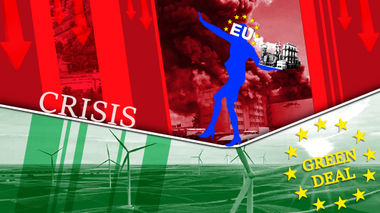 An article entitled Energiepreis-Schock: Was eine resiliente Energiewende leisten muss, dealing with the challenges of the energy transition amid soaring energy prices, was posted on the Konrad Adenauer Foundation’s website on 13 March.
An Energy Price Shock: What an Efficient Energy Transition Should Achieve
An article entitled Energiepreis-Schock: Was eine resiliente Energiewende leisten muss, dealing with the challenges of the energy transition amid soaring energy prices, was posted on the Konrad Adenauer Foundation’s website on 13 March.
An Energy Price Shock: What an Efficient Energy Transition Should Achieve
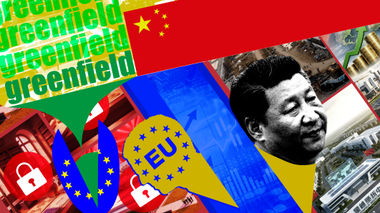 An article by James Green and Sander Tordoir from the Centre for European Reform analyzes the current EU policy in respect of Chinese foreign direct investment (FDI) in high technology sectors.
Europe’s Door to Chinese Tech Investment Is Still Ajar
An article by James Green and Sander Tordoir from the Centre for European Reform analyzes the current EU policy in respect of Chinese foreign direct investment (FDI) in high technology sectors.
Europe’s Door to Chinese Tech Investment Is Still Ajar
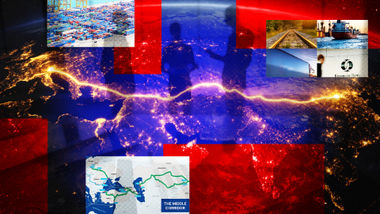 On 5 March 2026, The Hague Centre for Strategic Studies posted on its website a report entitled Reweaving Silk Roads: The Middle Corridor’s Role in EU Economic Security, dealing with the use and development of transit routes through Central Asia and South Caucasus.
Reweaving Silk Roads: The Middle Corridor’s Role in EU Economic Security
On 5 March 2026, The Hague Centre for Strategic Studies posted on its website a report entitled Reweaving Silk Roads: The Middle Corridor’s Role in EU Economic Security, dealing with the use and development of transit routes through Central Asia and South Caucasus.
Reweaving Silk Roads: The Middle Corridor’s Role in EU Economic Security
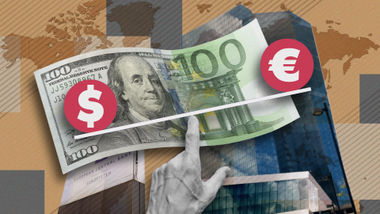 A report entitled The ECB’s bid to strengthen the euro’s global role by Spyros Andreopoulos and Sander Tordoir, former European Central Bank employees, was published on the website of the Centre for European Reform on 20 February 2026.
The ECB's bid to strengthen the euro's global role
A report entitled The ECB’s bid to strengthen the euro’s global role by Spyros Andreopoulos and Sander Tordoir, former European Central Bank employees, was published on the website of the Centre for European Reform on 20 February 2026.
The ECB's bid to strengthen the euro's global role
 The website of the Konrad Adenauer Foundation (Germany) has posted an article Europe in the Age of Geoeconomics by Tim Peter.
The article is a critique of the Buy European program designed to protect the European market amid global trade wars.
Europe in the Age of Geoeconomics
The website of the Konrad Adenauer Foundation (Germany) has posted an article Europe in the Age of Geoeconomics by Tim Peter.
The article is a critique of the Buy European program designed to protect the European market amid global trade wars.
Europe in the Age of Geoeconomics
 On 19 February 2026, a report entitled The Mercosur deal tests Europe’s geoeconomic ambition by Anton Spisak, a senior research fellow at the Centre for European Reform, was published on the Centre’s website. The report deals with the issues that arose in the ratification of the free trade agreement with MERCOSUR and highlighted the structural deficiencies in the EU’s trade agreement policy.
The Mercosur deal tests Europe’s geoeconomic ambition
On 19 February 2026, a report entitled The Mercosur deal tests Europe’s geoeconomic ambition by Anton Spisak, a senior research fellow at the Centre for European Reform, was published on the Centre’s website. The report deals with the issues that arose in the ratification of the free trade agreement with MERCOSUR and highlighted the structural deficiencies in the EU’s trade agreement policy.
The Mercosur deal tests Europe’s geoeconomic ambition
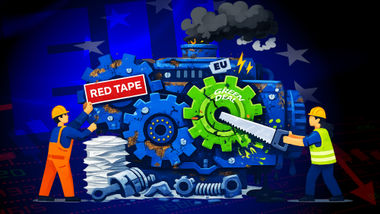 On 11 February, an article entitled Europe is chasing the wrong fix for its growth crisis was published on the Politico online newspaper’s website – dedicated to the idea of overcoming the EU’s economic lag by deepening its federalization and building it into the global economy.
Europe is chasing the wrong fix for its growth crisis
On 11 February, an article entitled Europe is chasing the wrong fix for its growth crisis was published on the Politico online newspaper’s website – dedicated to the idea of overcoming the EU’s economic lag by deepening its federalization and building it into the global economy.
Europe is chasing the wrong fix for its growth crisis