


Read news
Add bookmark
POPULAR
Oil? Gas? Fertilizer? Just Life.Europe Still Needs China: Washington is the Main ThreatNo More Safe Places in Europe? What Is the Logic Behind French Forward Deterrence?EU - China Relations: Role of the European Commission in Forming Strategic ProspectsA European Democracy Shield: Fighting Foreign Interference – Or Tight CensorshipA Ruthless Diagnosis. Europe More Paralyzed than DividedKalypso Nicolaidis: I Want a Woodstock for European Politics
A permanent citizens’ forum as the fourth branch of governance in the European Union should give citizens greater influence over European politics. This is the argument put forward by the French-Greek-British professor of international relations Kalypso Nicolaidis. According to her, the task for progressive parties is also to reshape the agenda of fairness and justice – and to find the right language for it. “We can no longer come along with nothing more than ‘it’s good for the planet’ when a CEO earns 2,250 times the minimum wage.”
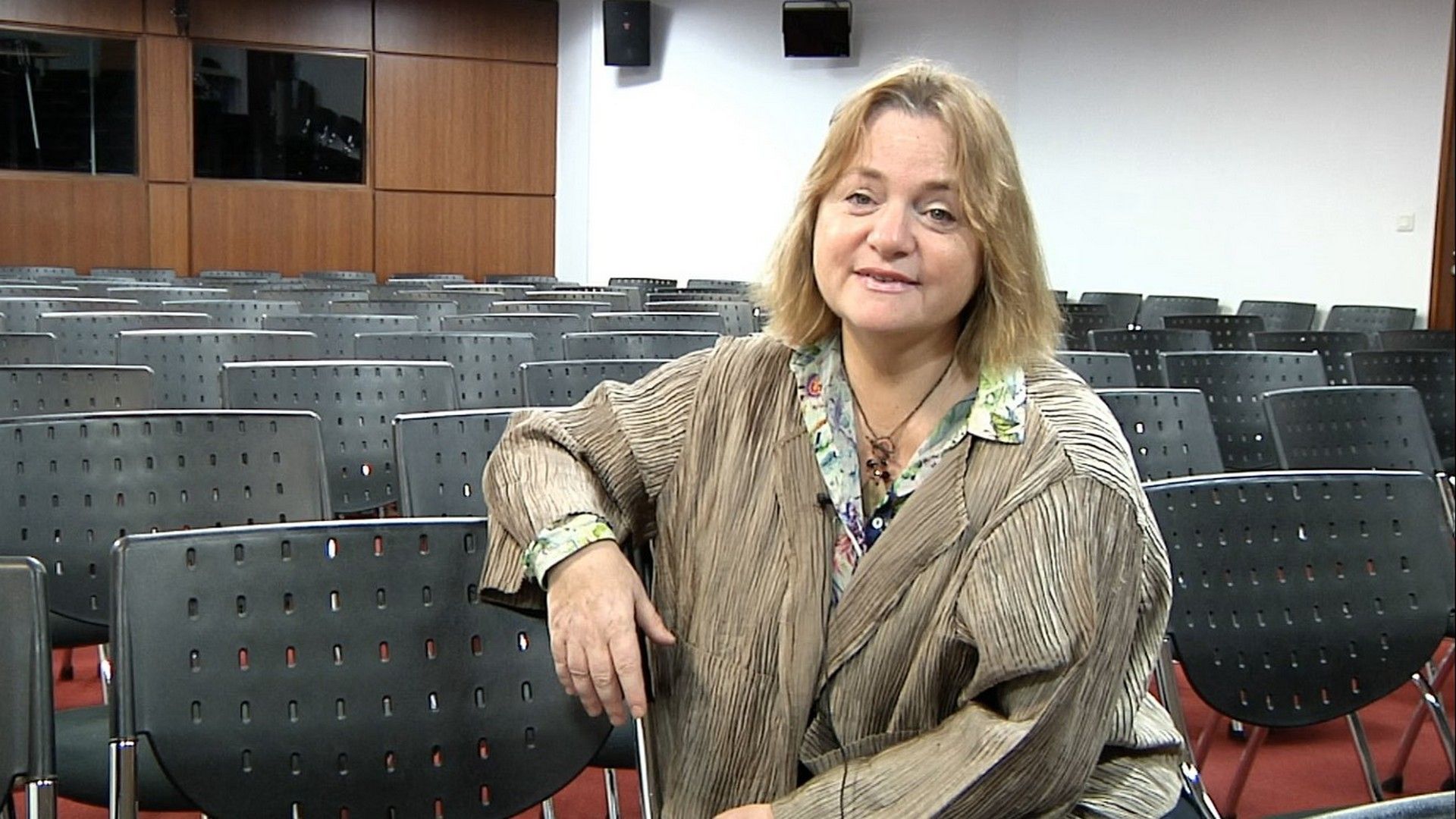
The first appointment has to be rescheduled at the last minute: Kalypso Nicolaidis is travelling and is sitting on a bus. Amid the constant juggling of her many commitments – “as women do,” she adds with a conspiratorial wink to the interviewers – the bus journey had briefly slipped her mind. A week later, we speak to her online from Oxford, one of the places the French-Greek-British professor of international relations calls “home.” She is affiliated with the European University Institute in Florence and Oxford University, has held professorships at Harvard University and the École Nationale d’Administration in Paris, and has advised, among others, the European Parliament, the European Commission, and the Dutch and British governments. Her research focuses on European integration, democracy and international trade, but also on postcolonialism, theatres of recognition and transnational legal empathy.
At the time of the interview, the European elections have not yet taken place, but the polls are already pointing to another increase in seats for far-right and right-conservative political families in the European Parliament. What does this mean for democracy in Europe? What task does it create for progressive parties? And what role should the concepts of “demoicracy” and “planetary politics” – both central to Nicolaidis’s work – play in European politics?
Theatres of recognition, transnational legal empathy – it sounds fascinating. What exactly do you study under these concepts?
“If there is one thread running through my research, it is that of mutual recognition: how do citizens live together with all their differences? Genuine recognition goes beyond mere tolerance, which is too often what we settle for when dealing with different groups within a society or with other countries. Recognition means that we always want to learn more about one another. It creates space for mutual empathy and makes it much easier to accept our different habits, fears or desires. Philosophically, it is probably the most ambitious version of liberalism, but it can also be translated into law and governance. That is where we enter the field of legal empathy.”
“People often think of harmonisation when they think of European integration: step by step, we adopt the same rules across Europe. But the common market, which formed the starting point of European integration and still remains its core, was in fact based much more on the principle of legal empathy. French doctors who come to the Netherlands do not have to repeat their medical studies; their French degree is recognised. Legal empathy means that the judges, members of parliament or professional associations who make such arrangements become familiar with each other’s rules and laws. They compare the two systems, look for ways to reconcile them, and determine the maximum degree of difference they are willing to accept. And then they mutually recognise one another as equal. This requires us not to cling to the belief that our own system is best, but to place ourselves within the system of another country. Can we live with our differences, and are our systems still compatible?”
Parties with little empathy for “the other” seem to be growing strongly. Radical-right political families are on the rise, while Christian Democrats are presenting plans for weaker climate policy and stricter migration rules. What, in your view, are the main causes of this shift to the right in Europe?
“I can imagine that, as D66, you have also been racking your brains over this question after the elections in the Netherlands. There is no simple answer; there are only broad patterns. We all know that these voters harbour feelings of resentment because they feel they have been treated unfairly by their national governments. In their eyes, Europe reinforces this by taking decisions that benefit groups to which they do not belong – such as environmental activists or large corporations.”
“People with such grievances can retreat within the public sphere into echo chambers where they mainly encounter others with the same feelings and ideas, and where they are not easily confronted with different views. The ideal of mutual recognition between people is pushed into the background. Of course it is difficult to remain open when people are not only angry but also afraid of the future. People are more likely to vote for anti-system parties that idealise the past than for the progressive or left-wing idea that we can work together towards a better future.”
“In such an atmosphere, scapegoats are found – whether they are the poorest, who are accused of ‘abusing’ the system through their social rights, or the foreigner who is said to be abusing ‘our’ hospitality.”
“When they are in power, by the way, far-right parties have no choice but to acknowledge the iron law of demography: we simply need foreigners to do the dirty work and to pay for our pensions. Look at immigration figures under Italian prime minister Giorgia Meloni: they are set to reach half a million by 2026.”
Have progressive parties contributed to the growth of the far right?
“They have focused far too much on socio-cultural issues and far too little on socio-economic questions and distributive justice. In 2023, Carlos Tavares, the head of the car company Stellantis, earned 2,250 times the French minimum wage and 518 times the average salary within his own company. That makes people furious.”
“Research shows that if you protect or compensate the so-called ‘left behind’, far-right parties are less able to exploit cultural and economic insecurities. Progressive parties have tolerated a certain type of capitalism that produces enormous inequalities and existential insecurity – within countries and between them. That also alienates young voters, who are rebelling against it.”
Is there also a problem in the way the EU is governed?
“The problem is not so much the institutional structure of the EU as the citizens’ sense of powerlessness. If citizens do not feel that they have any influence over what their governments do, the EU greatly magnifies that feeling. The EU has tried to bridge the gap, including through the so-called Conference on the Future of Europe in 2021 and 2022. It was certainly a wonderful experiment with citizens’ assemblies, but it remained unknown to the wider public.”
“The problem is that initiatives of this kind do not move beyond the stage of consultation. There is no innovative strategy for a broad public debate beyond a small circle of stakeholders.”
Why does the EU not make a greater effort to involve citizens? Does it not want to, or is it unable to?
“That is a good question, and there is no simple answer. On the one hand, I think it has to do with the simple fact that nobody likes giving up power. Bureaucrats like to set their own agenda and rely on the expertise and experience they already have in-house. Parliamentarians say that they want to involve citizens, but often that remains lip service.”
“When it comes to citizens’ assemblies, they often think: I have a mandate from tens of thousands of voters, which gives me a far more legitimate status than a handful of citizens randomly selected by an algorithm. They often fail to realise that such citizens’ forums provide a much better reflection of society as a whole. In fact, they dispute that, because it poses a threat to their own legitimacy.”
“On the other hand, even if you do want to involve citizens, it is not so easy. How do you get people to devote time to politics? Institutions lack the ability to involve the worlds of art, theatre, music and other forms of expression – forms through which people might find it easier to express themselves politically. I dream of an annual Woodstock for European politics: a huge festival with performances and political discussions.”
“After the Dutch ‘no’ in the 2005 referendum on the European Constitution, I contributed to a study by your Scientific Council for Government Policy on the lessons we could draw from it. There we came up with the idea of ‘preferenda’ instead of referenda. In a referendum, the choice is only ‘yes’ or ‘no’, whereas many people feel: well, perhaps it is not either-or. In a preferendum, people are presented with several options and can express their preference. Preferenda are much more subtle and allow far more room for nuance. We must keep innovating in the way we involve citizens.”
What does that require from politicians?
“Partly, it means making politics more relevant to people’s lives. Partly, it means giving people the feeling that they are not powerless and that the system can indeed work fairly for them too.”
“It also requires something from the way we speak about issues such as climate and justice between generations and between social classes. These must become the subject of deep democratic discussion, and we must facilitate and nourish those discussions. That starts, among other places, in education. Schools must start doing democracy. If a school needs to be painted, the leadership should involve all pupils in the question of what colour it should be. That is how children learn that their voice counts and develop a democratic disposition.”
“Ultimately, we need a much better deliberative democracy in Europe: citizens’ forums in which citizens debate major issues with one another in a way that the whole of society can follow. During the citizens’ assembly on abortion in Ireland, lively discussions were taking place in every pub about the issue the assembly had been working on that day.”
Is that what you call “demoicracy”?
“Demoi is the plural of demos – people – in Greek. The idea of demoicracy is that the EU is a union of peoples who govern together, but not as one. The pursuit of a single European people is not only unrealistic; it is also too easy. Demoicracy is demanding: it requires a web of horizontal connections between citizens in different countries, so that we can grow from merely existing alongside one another towards mutual recognition.”
“For a true demoicracy, therefore, we need transnational citizens’ forums in which citizens from different countries enter into discussion with one another and ultimately take decisions. A permanent citizens’ forum should become the fourth branch of governance in the European Union. This is what we advocate in our project, The Democratic Odyssey.”
How do we get citizens excited about this, especially given the growth of parties with a strongly anti-European sentiment?
“It is interesting that some far-right parties also call for greater citizen influence. So with these ideas we are moving somewhat onto their terrain – but from the perspective of justice and solidarity rather than exclusion and withdrawal.”
“To create ‘translocal’ connections, we can look at the example of cities. We have a large network of hundreds of cities cooperating with one another across the EU. We can learn from that. But there is still a great deal of work to be done. The glass is still half empty.”
“Incidentally, we can also learn a great deal from democratic innovation in other parts of the world. In Europe, we have a tendency to tell others how things should be done, but of course many countries around the world have experimented with ways of involving people in local decision-making. In Lebanon, the state is barely present, but a network of NGOs and citizens provides local public goods. In Spain, citizens are closely involved in tackling the housing crisis. If we want to shape democratic geopolitics, the EU should reverse the roles for once and ask the rest of the world what we should do.”
You also argue for planetary politics. What does that mean?
“Whether we are talking about conservatism, socialism or liberalism, mainstream political ideologies treat green policy as just one item on the agenda. But today we are moving towards a world in which the planet and planetary boundaries themselves are at the centre of ideological conflict. Young people already look at politics in this way: what do ideologies have to say about the planet?”
“Planetary politics starts from the idea that people within a democracy have, first and foremost, a responsibility towards the planet. I do not think we have any choice but to understand politics in this way.”
Is the ideal of planetary politics not moving further and further out of reach? Far-right parties deny the climate problem, and Prime Minister Rutte said that we should still be able to keep barbecuing.
“Defending the barbecue really is becoming a macho thing, isn’t it? Macron is doing it too now. It would be amusing if it were merely funny, but in fact it reminds us that genuinely difficult choices have to be made.”
“To be honest, I do not think most ordinary people are trying to proclaim some sacred right to barbecue. They are worried about their children’s future. And at the same time, they are worried that they will have to make far greater sacrifices for that future than the boss who earns 2,250 times the minimum wage.”
“The task for progressive parties is to address the great inequality and the many injustices in society. I think what people hate most is unfairness. Is it not the case that, as children, after ‘mama’ and ‘papa’, we learn to say: ‘It’s not fair’? People have a deeply rooted need for justice, and progressive parties must reshape the agenda of fairness and justice – and find the right words for it.”