





Read news
Add bookmark
POPULAR
Kalypso Nicolaidis: I Want a Woodstock for European PoliticsOil? Gas? Fertilizer? Just Life.How the “virtues” of neoliberal globalization paved the way to its demiseMario Draghi Calls Europe to Action AgainWhy capitalism is fundamentally undemocraticZionists, lawfare and the malady called revenge18 Months After Mario Draghi’s Report About European Competitiveness Prospects. Two Perspectives on the State of AffairsHow Much Do Experts’ Ideas Matter for the European Union’s Political Agenda?
by Vivien Schmidt
Jean Monnet Professor of European Integration, Professor Emerita of International Relations and Political Science
Introduction
Experts have over the years produced countless policy briefs, reports and documents in efforts to influence policy-makers’ decisions about EU economic policy and governance. In a special category are the expert reports officially commissioned by EU institutional actors. In the past, the most influential such reports included the 1970 Werner report, the 1985 Cockfield report on completing the single market and the 1989 Delors report on monetary union, amongst others (see Gros, this issue). The latest examples are the reports by Enrico Letta (2024) on the single market and by Mario Draghi (2024) on competitiveness in the EU (see Chang, this issue; Gros, this issue; Moschella and Quaglia, this issue). These reports, much like the earlier ones, can be seen as game changers for the EU political agenda in terms of their levels of ambition and innovation.
Whether the Letta and Draghi expert reports have a direct or immediate impact on the EU political agenda remains an open question. Much depends upon such imponderables as the political will of EU leaders in the European Council, the administrative capacities of the European Commission and the evolving politics of the European Parliament (EP) and of member states in an increasingly populist extreme right context. Institutional constraints or opportunities, political serendipity and timing are additional factors. Moreover, what the reports leave out is as important for the future as what they put in.
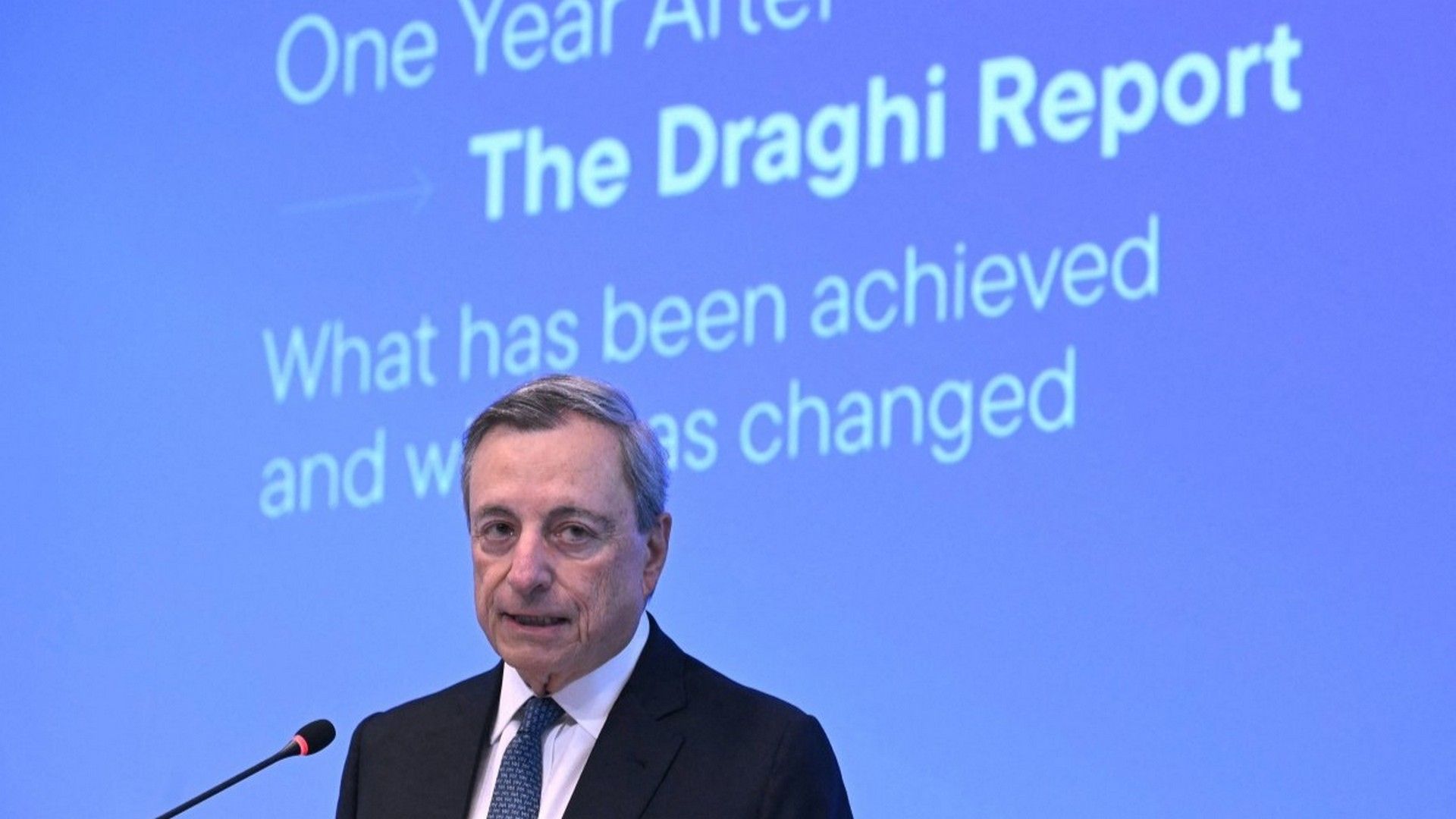
But whatever their ultimate impact, the Letta and Draghi reports have raised the bar with regard to the ideas that will shape the conversation about the goals and parameters of the EU agenda for years to come and, in so doing, have provided a legitimating reference for all those pushing for deeper integration to address the existential challenges facing the EU. The reports have accomplished this not only as a result of the persuasive presentation of their main ideas but also through their circulation both ex ante via the initial widespread consultations in the reports’ drafting phase and ex post through the widescale debates as well as contestation about their recommendations amongst EU institutional actors and member state political elites, amongst experts in think tanks and professional networks, by opinion leaders and civil society organisations and by the media. Put more simply, the reports have renewed the EU’s political agenda by providing a co-herent and ambitious new vision about what should and could be done to make the EU a success as a supranational polity and world economic power. And in so doing, regardless of how or even whether the specific recommendations are translated into practice, the reports have served as catalysts for focused discussions across Europe about what to do and how to do it.
This contribution begins with a brief discussion of how experts’ ideas matter and then discusses why the Letta and Draghi reports substantively matter for the EU political agenda. In so doing, it demonstrates the persuasive power of expert reports not only as a result of what they say but also how they say it, that is, through narratives and framing, and to whom they say it, that is, the people included in the reports’ construction and the audiences targeted in their communication. But the contribution also points to the potential limits to the reports’ impact as a result of underlying ideological blinders or strategic omissions.

I. How the Reports Are Made to Matter
To matter, ideas need to be constructed in ways that resonate, and they have to be developed and communicated widely. In the construction of ideas, this means that ‘ideational entrepreneurs’ need to create compelling narratives and enlightening frames able to convince people that they have adequately identified the problems and proposed valid solutions that are appropriate in terms of community values. In the development and communication of ideas, it means that the ideas need to be cognitively justified in the context of experts’ ‘discursive communities’ and normatively legitimated to the public (Schmidt, 2002, 2008, 2020). Finally, for ideas not only to matter but also to have ‘persuasive power’, they need to be able to bring people over to their point of view, thereby constructing something of a consensus on what needs to be done (Carstensen and Schmidt, 2016).
Narratives are set in time with a beginning, middle and end and are intended to serve as guides to understanding the world and perceptions of what to do within it (Patterson and Monroe, 1998). Frames and framing provide more sharply delineated, non-temporal guideposts to knowledge and action (Schön and Rein, 1994). The influence of ‘ideational entrepreneurs’ (Stiller, 2010) who deploy such narratives and frames comes not just from the quality of their own intellectual production – since who they are in terms of professional accomplishments and public recognition is also important. It also follows from the circulation of their ideas and discourse in professional settings (where citations matter) and through public debates, deliberations and contestations (where media attention matters) (Abelson, 2018). To make a difference, however, ideas and discourse also need to travel by way of the co-ordinative discourse of policy construction (Schmidt, 2008), including by dissemination through epistemic communities of like-minded individuals (Haas, 1992), promotion through advocacy coalitions that link experts and policy-makers (Sabatier, 1988) and active engagement through professional networks of experts (Fourcade, 2009). But they also need to be communicated to the more general public for discussion, deliberation and contestation by informed publics and the media in their efforts to persuade all and sundry of the cognitive necessity and normative appropriateness of the ideas (Schmidt, 2008).
All these qualities have characterised the Letta and Draghi reports. The reports have generated compelling narratives about the past and current problems of the EU in terms of the incompleteness of the single market and the EU’s more general lack of competitiveness in order to then recommend pathways to the future. They have framed the issues as constituting an existential crisis and outlined action plans and road maps to address the EU’s failings. Moreover, they have cognitively justified their findings by citing Commission White Papers (primarily the Letta report) and expert research (mainly the Draghi report) whilst they have normatively legitimated their recommendations through appeals to EU community values.
The Letta report, for example, reframes the discussion of capital markets union – which has languished for years as a Commission goal – by renaming it a savings and investment union. It then provides a narrative that shows the interconnections amongst areas that have long been treated separately, to show how only together can they ensure a more robust future for the single market and indeed for the EU as a whole. Normatively, moreover, the Letta report insists for the area of communications that its proposed initiatives would help remedy the ‘current failures in a way that remains coherent with European values, and citizens’ rights and market economy principles’, with ‘European consumers’ welfare at the core of the project’ (Letta Report, p. 53). It also repeatedly refers to the need to ensure that the EU continues to promote equality and maintain the rule of law whilst enhancing democracy. The Draghi report additionally expresses concern for the effects of hyperglobalisation on workers, suggesting that political elites had not sufficiently addressed the fallout from that as well as from automation, which together led to falling wages and rising inequality. The report further suggests that attention needs to be paid to ensuring this does not happen again, with a focus on skills formation and training as essential to remedying the problems.
The reports have been equally the subject of an impressive amount of co-ordinative consultation during the drafting phase as well as significant engagement in communicative legitimation after their official publication. The Letta report begins with a first person narrative of Enrico Letta’s impressive amount of outreach, 400 meetings in 65 cities. His purpose is to highlight the need for infrastructure, as well as to point to the single market as ‘the cornerstone of progress in the EU’, in which ‘we need everyone’ to play their role. At the same time, however, the account provides evidence for the extensive co-ordinative discourse involving widescale consultations not only with national capitals and EU institutional actors but also with experts in independent think tanks and EU-focused institutes as well as with business and union groups and civil society. Draghi’s report also demonstrates an extraordinary amount of co-ordinative consultation, as evidenced from the long list at the beginning of the report of engagement with economic experts and think tanks, businesses and unions, and non-governmental organisations, amongst others. All of this ensured the widespread circulation of ideas, with their influence not only going from outside in, from epistemic communities, advocacy coalitions and expert networks to the reports’ drafters acting as ‘policy brokers’ (Sabatier, 1993), but also in the other direction, from inside out. The drafters also acted as ‘ideational entrepreneurs’ to convince their interlocuters not only of the best way to solve their specific problems but also how the solutions connected to necessary solutions in other areas. Once the reports were published, moreover, both Letta and Draghi engaged in a tremendous amount of communicative discourse, taking repeated ‘whistle stop’ tours across Europe to speak in countless public venues to relevant bodies whilst giving interviews to the media. In so doing, they sought not just to make people aware of the reports and the urgency of translating their recommendations into practice but also to legitimate them.
As a result of the narratives and framing as well as the wide circulation of their ideas amongst experts and to the wider public, the reports have not simply mattered; they have had persuasive power. This is evidenced by the way in which the reports have become the starting point for EU discourse about the political agenda, amongst experts as well as policy-makers – even if some of their ideas remain contested. When or even whether their ideas are finally placed on the official agenda, let alone get implemented, is a different question and depends on a range of factors beyond whether the ideas and discourse themselves matter and persuade. These include not only finding ways to reconcile conflicting economic priorities (see Chang, this issue) but also ensuring political legitimacy for change, along with the political will to make it happen (see Moschella and Quaglia, this issue). Time will tell. At the moment, suffice to say that the crisis precipitated by Trump’s hostile moves on security and trade has already galvanised EU actors to move forward on some of the ideas in the reports, albeit largely for the moment in piecemeal fashion.
II. Why the Reports’ Substantive Ideas Matter
Published before the massive disruptions generated by President Donald Trump’s second term in office, the 147-page Letta report and the 70-page Draghi report cover a vast terrain related to EU economic policies and governance. In so doing, they even anticipate some of the major initiatives required to meet the challenges, including the security threats posed by a potential US retreat from NATO and the economic perils related to ‘America First’ policies in terms of trade and tariffs. But they also respond to issues raised by President Biden’s US-focused industrial policy and more generally by the omnipresence of US-based giants of the platform economy and artificial intelligence (AI), along with the decline of EU competitiveness in terms of economic growth and productivity in comparison with the United States as well as China.
The reports call for the creation of EU strategic autonomy not only in security and defence but also in areas such as AI and platform economies. They point to the pressing need for European industrial policy and promotion of EU industrial capacity, which in turn depends on the enhancement of research capabilities and innovation along with education and skills training, and for EU level investment to scale up big firms as well as small and medium-sized enterprises (SMEs) (for more detail, see Gros, this issue). But all such initiatives, they show, require the integration of the financial markets as an attractive place as well as a safe haven for European savings in order to generate European capital investment in the real economy. Moreover, to make any of this work demands a rethinking of competition policy and rules on State aid; the revision, streamlining and harmonisation of regulation at EU and national levels to make investing in Europe easier and more cost-effective; and the reform of the EU’s decision rules to overcome impediments to quick and effective responses to the EU’s challenges. In addition, whilst the Letta report explicitly addresses the need for combatting climate change and social inequality as well as for greater citizen input into EU decisions, the Draghi report directly calls for EU level common borrowing to the tune of 750 to 800 billion euro, so as to help generate needed funding for EU-wide investment to digitalise and decarbonise the economy whilst at the same time putting the Euro on the path to becoming an international reserve currency. As a result, taken together, the reports in different ways are calling for fiscal federalism, albeit a thin version of one without significant redistribution, and they do not use the term.
One important element missing from both reports is consideration of how the constraints on investment imposed by the Eurozone’s fiscal rules undermine their ambitious plans for revitalising the EU’s economy. These rules, reinforced during the Eurozone crisis, had been suspended in 2020 in response to the Covid-19 crisis, at the same time that the taboo on EU-level debt was broken with the temporary Resilience and Recovery Fund (RRF) that accompanied the Next Generation EU (NGEU) Programme. But after extensive debates in 2022–2023, the rules were only slightly reformed for 2024 and beyond, with no new EU-level investment fund (despite initial talk in the Commission of setting up a small European Sovereign Fund).
In the debates in the run-up to the revisions of the rules, research by independent experts and think tanks argued that the challenges confronting the EU – including sustainability risks linked to climate change and the energy crisis, security risks linked to the Ukraine war, competition risks linked to the need for an EU industrial strategy to match that of the United States and social risks linked to rising social inequality – required major new fiscal capacity at the EU level (e.g., De Angelis et al., 2022; Heimberger and Lichtenberger, 2023). With the reapplication of the fiscal rules and in the absence of any EU-level investment fund, many policy analysts worried about the potentially negative effects on member state economic health as well as on investment for the green transformation and digital transition (e.g., Greentervention, 2023; Hafele et al., 2023). Analysts found that only a handful of member states would be able to meet the EU’s green investment targets, were they so inclined (Mang and Caddick, 2023), and that once the RRF ran out in 2026, the national spending gap for green investment would become much more problematic for highly indebted countries in view of the fiscal rules (Tordoir, 2023; see also Darvas et al., 2023). With regard to the fiscal rules themselves, moreover, many policy analysts had called for the rules to be permanently suspended, to be replaced by a set of ‘fiscal standards’ to assess sustainability in context (Blanchard et al., 2021) or by a ‘Golden Rule’ in which public investments beyond those that are part of NGEU would not be counted towards deficits or debt when deemed to benefit the next generation (Bofinger, 2020).
Instead, the EU went back to ‘governing by rules and ruling by numbers’ (Schmidt, 2020), with only slightly revised numbers and longer time frames for member states to meet their targets. The consequences for public investment are not encouraging. An evaluation of member states’ fiscal plans under the new rules by experts in a top EU think tank, Bruegel, suggests that public investment as a share of GDP is projected to be reduced in more than a third of the euro members, and to rise overall by less than 0.2% from 2024 to 2028. The report concludes that an ‘EU fund financed through borrowing as a successor to NextGenerationEU is essential to addressing the significant investment gaps facing the EU’ (Boivin and Darvas, 2025).
By seeming to tacitly accept the return to the fiscal rules without addressing their deleterious impact, let alone suggesting work-arounds or ways to go beyond them, the Letta and Draghi reports have failed to grapple with one of the biggest impediments to achieving their goals, in particular, with regard to addressing climate change and social inequalities. The omission may have been due to ideological blinders based on the ordoliberal commitments to rules-based stability deeply embedded in the founding principles of the European Monetary Union. Or it may be the result of strategic decisions based on the assumption that there was little hope of changing the recently revised rules anyway, especially in the face of the adamant resistance to any easing of the rules by Germany (supported by other so-called ‘frugal’ countries). Not only did the Letta report avoid mention of the fiscal rules; it made little more than an oblique reference to the benefits of EU level shared debt when it noted that the move towards combining existing EU bonds issuances under a ‘single issuance … could become even more visible were the funding of European public goods such as digital, energy or defense infrastructures and equipment, or the reconstruction of Ukraine, to be made through borrowing by EU institutions … making them the main instrument of reference for the ECB’ (Letta, p. 36). In contrast, although the Draghi report of September 2024 explicitly proposed the creation of serious EU level investment capability, in exchange it called for ‘a stronger set of fiscal rules which ensure that an increase in common debt is matched by a more sustainable path of national debt’ (Draghi, 2024, p. 65).
The security and defence concerns raised in the reports, in contrast, have been subsequently dealt with in an ad hoc manner, once Trump came into office with demands for the EU to increase defence spending up to 5% of GDP, and with reduced support for Ukraine in the war with Russia. In addition to the Council agreeing to a 150 billion euro defence fund, the Security Action for Europe (SAFE) financial instrument, designed to support those member states wanting to invest in defence industrial production through common procurement, the Commission invoked the escape clause to exclude national defence spending from the calculation of countries’ deficits and debt. The escape clause seems to have done little more than green light what countries had already decided for themselves. In Germany, the newly elected conservative Chancellor Merz, having campaigned on no new debt or suspension of the national debt brake, made an about-face and, together with the social democrats, his future coalition partner (and outgoing government), agreed to suspend the national debt brake in order to set up a massive fund for defence and infrastructure spending. France and Italy, in contrast, have done nothing. Their high deficits and/or debt levels make them wary of adding to their debt burden through greater investment in defence, because of worries about financial markets and rating agencies. In other words, countries with the fiscal space may invest and do so without concern about the rules. Countries without the fiscal space are not likely to invest, posing problems for the EU’s rising to its many challenges.
An additional problem with regard to the easing of the fiscal rules on defence spending is that it risks crowding out any other investment and can lead to a trade-off with spending on climate as well as social welfare and public services. Much depends here on how security and defence are defined. If it is all about guns and bullets, tanks and drones, missiles and rockets, then the risks to green and social spending are clear. If instead it becomes a catch-all for reinvigorating innovation across the economy through AI, the energy transition, climate change, digitalisation, reskilling and more, as in a recent report by the former Finnish President (Niinistö, 2024; see Howorth, this issue), then it might just be the breach in the dike necessary to open up the floodgates to EU-level investment capability across a wide range of essential areas. But then again, it might not, given some member states’ and experts’ questioning of the value or necessity of generating more EU-level debt (see Gros, this issue). Moreover, even if such EU-level debt were agreed, it might not be enough, given the massive investment required (see Chang, this issue).
Conclusion
Leaving aside the (very important) caveat on the fiscal rules, the two reports have not only mattered; they have exercised persuasive power by changing ideas and discourse about what to do in the EU and how to do it. Although they may not have convinced all parties that full integration of the single market with a major role for industrial policy along with EU level investment capability through common EU bonds is the best way forward, they have provided the cognitive and normative arguments along with the road maps necessary for the many policy-makers in EU institutions – Commission, Council and European Parliament – to plan how to move forward. It is still too early to tell when or even whether the reports’ ideas will fully take hold, becoming policy. This may have to wait for yet another activating crisis, political serendipity or ‘the stars being in alignment’ to enable policy-makers to deploy the ideas in these reports in order to overcome the many obstacles to solving the EU’s many challenges.
Vivien Schmidt
Jean Monnet Professor of European Integration, Professor Emerita of International Relations and Political Science
References
Abelson, D.E. (2018) Do Think Tanks Matter? Assessing the Impact of Public Policy Institutes (3rd edition) (Montreal: McGill-Queen’s University Press).
Blanchard, O., Leandro, A., and Zettelmeyer, J. (2021) ‘Redesigning EU Fiscal Rules: From Rules to Standards’. Peterson Institute for International Economics, Working Paper 21-1, February.
Bofinger, P. (2020) ‘Easing the EU Fiscal Straightjacket’. Social Europe, 14 December. https://socialeurope.eu/easing-the-eu-fiscal-straitjacket
Boivin, N. E. and Darvas, Z. (2025) ‘The European Union’s New Fiscal Framework: A Good Start, but Challenges Loom’. Policy Brief 06/2025, Bruegel.
Carstensen, M.B. and Schmidt, V.A. (2016) ‘Power Through, Over and in Ideas: Conceptualizing Ideational Power in Discursive Institutionalism’. Journal of European Public Policy, Vol. 23, No. 3, pp. 318–337.
Darvas, Z., Pisani-Ferry, J., and Zettlemeyer, J. (2023) ‘Bringing the Reform of European Union Fiscal Rules to a Successful Close: EU fiscal rules must not unnecessarily restrict green invest-ment’. First Glance, Bruegel, December 12. https://www.bruegel.org/first-glance/bringing-reform-european-union-fiscal-rules-successful-closeDe Angelis, F., Mollet, F., and Rayner, L. (2022) ‘Rethinking EU Governance: The Foundation for an Inclusive, Green and Digital Transition’. Discussion Paper, European Policy Center, Febru-ary 9. https://www.epc.eu/en/publications/Rethinking-EU-economic-governance-The-foundation-for-an-inclusive-gr~45b1cc
Draghi, M. (2024) ‘The Future of European Competitiveness: A Competitiveness Strategy for Europe’. https://commission.europa.eu/topics/eu-competitiveness/draghi-report_en
Fourcade, M. (2009) Economists and Societies (Princeton: Princeton University Press). Greentervention. (2023) ‘European Fiscal Rules: The Proposal of the European Commission Tested for 2024!’. Greentervention blog, 19 June. https://greentervention.org/2023/06/19/eng-fr-regles-budgetaires-pourquoi-et-comment-ameliorer-la-proposition-de-la-commission-europeenne/
Haas, P. (1992) ‘Introduction: Epistemic Communities and International Policy Coordination’. International Organization, Vol. 46, No. 1, pp. 1–35.
Hafele, J., Korinek, L. and Bertram, L. (2023) Linking EU Fiscal Rules to Climate Targets: A Proposal for Climate-Linked Extension of Budgetary Adjustment Paths (Cologne: ZOE Institute for Future-fit Economies) https://zoe-institut.de/wp-content/uploads/2023/03/Sustainability-linked-Fiscal-Leeway.pdf
Heimberger, P., and Lichtenberger, A. (2023) ‘RRF 2.0: A Permanent EU Investment Fund in the Context of the Energy Crisis, Climate Change and EU Fiscal Rules’. Policy Notes and Reports No. 63, Vienna Institute for International Economic Studies. https://wiiw.ac.at/rrf-2-0-a-perma-nent-eu-investment-fund-in-the-context-of-the-energy-crisis-climate-change-and-eu-fiscal-rules-dlp-6425.pdf
Letta, E. (2024) ‘Much More Than a Market. Speed, Security, Solidarity. Empowering the Single Market to Deliver a Sustainable Future and Prosperity for All EU Citizen’. https://www.consilium.europa.eu/media/ny3j24sm/much-more-than-a-market-report-by-enrico-letta.pdf
Mang, S. and Caddick, D. (2023) ‘Beyond the Bottom Line: How Green Economic Policy Can Drive Economic Change and Speed Up Climate Action’. New Economics Foundation, April 28. https://neweconomics.org/2023/04/beyond-the-bottom-line
Niinistö, S. (2024) ‘Safer Together – Strengthening Europe’s Civilian and Military Preparedness and Readiness Report to the President of the European Commission’. https://commission.eu-ropa.eu/document/download/5bb2881f-9e29-42f2-8b77-8739b19d047c_en?filename=2024_Niinisto-report_Book_VF.pdf
Patterson, M. and Monroe, K.R. (1998) ‘Narrative in Political Science’. Annual Review of Political Science, Vol. 1, pp. 315–331.
Sabatier, P. (1988) ‘An Advocacy Coalition Framework of Policy Change and the Role of Policy-Oriented Learning Therein’. Policy Sciences, Vol. 21, No. 2/3, pp. 129–168.
Sabatier, P. (1993) ‘Policy Change Over a Decade or More’. In Jenkins-Smith, H. C. and Sabatier, P. (eds) Policy Change and Learning: An Advocacy Coalition Approach (Boulder, Colorado: Westview), pp. 143–173.
Schmidt, V.A. (2002) The Futures of European Capitalism (Oxford: Oxford University Press).
Schmidt, V.A. (2008) ‘Discursive Institutionalism: The Explanatory Power of Ideas and Discourse’. Annual Review of Political Science, Vol. 11, pp. 303–326.
Schmidt, V.A. (2020) Europe’s Crisis of Legitimacy: Governing by Rules and Ruling by Numbers in the Eurozone (Oxford: Oxford University Press).
Schön, D.A. and Rein, M. (1994) Frame Reflection: Toward the Resolution of Intractable Policy Controversies (New York: Basic Books).
Stiller, S. (2010) Ideational Leadership in German Welfare State Reform (Amsterdam: Amsterdam University Press).
Tordoir, S. (2023) ‘EU Fiscal Reform Has Become a Defensive Fight’. Euractiv, May 3. https://www.euractiv.com/section/economy-jobs/opinion/eu-fiscal-rule-reform-has-become-a-defen-sive-fight/