





Current topics
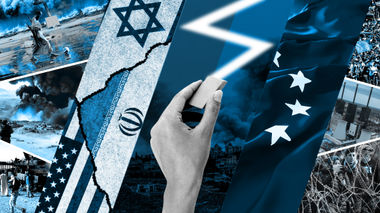
A Middle Eastern War Without Europe What Can United Europe Do with Its Opportunities Severely Limited?
 Have you participated in a project or program funded by Stiftung Mercator? Are you currently involved in one, or part of our team or partner network?
Then we warmly invite you to become part of the MercatorGlobe Community!
Have you participated in a project or program funded by Stiftung Mercator? Are you currently involved in one, or part of our team or partner network?
Then we warmly invite you to become part of the MercatorGlobe Community!
Welcome to our community network!
Sign Up for More
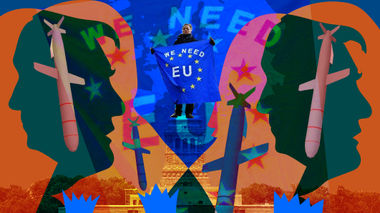 As the U.S. and Israeli military campaign against Iran escalates in gross violation of international law, there is a growing conviction that European governments must take a firm stand in respect of this conflict.
Trump’s War Against Iran Is an Illegal War of Choice – and Europeans Should Say So
As the U.S. and Israeli military campaign against Iran escalates in gross violation of international law, there is a growing conviction that European governments must take a firm stand in respect of this conflict.
Trump’s War Against Iran Is an Illegal War of Choice – and Europeans Should Say So
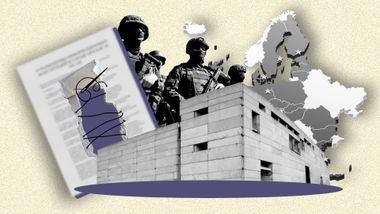 'Let's be really honest: it's a mess.' That was the assessment offered by UK Minister for Veterans Al Carns as he commented on the 2026 armed forces bill and the insignificant changes it makes in the British draft and mobilization system.
Sticking Power or a Sticking Plaster? How the New Armed Forces Bill Will Affect the UK’s Preparedness for War
'Let's be really honest: it's a mess.' That was the assessment offered by UK Minister for Veterans Al Carns as he commented on the 2026 armed forces bill and the insignificant changes it makes in the British draft and mobilization system.
Sticking Power or a Sticking Plaster? How the New Armed Forces Bill Will Affect the UK’s Preparedness for War
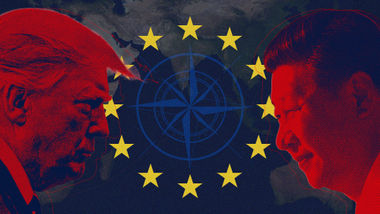 On 26 February 2026, an article entitled Gone with the West. How the transatlantic split helps China and forces Europe to rethink its Indo-Pacific strategy by Andreas B. Forsby, senior researcher at the Danish Institute for International Studies, was posted on the Institute’s website.
Gone with the West. How the transatlantic split helps China and forces Europe to rethink its Indo-Pacific strategy
On 26 February 2026, an article entitled Gone with the West. How the transatlantic split helps China and forces Europe to rethink its Indo-Pacific strategy by Andreas B. Forsby, senior researcher at the Danish Institute for International Studies, was posted on the Institute’s website.
Gone with the West. How the transatlantic split helps China and forces Europe to rethink its Indo-Pacific strategy
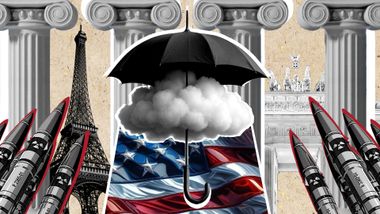 With America’s credibility constantly eroding, Europeans are looking for alternatives to the U.S. nuclear umbrella.
A Nuclear Button of Their Own Why Is Europe Considering Non-U.S. Nuclear Options?
With America’s credibility constantly eroding, Europeans are looking for alternatives to the U.S. nuclear umbrella.
A Nuclear Button of Their Own Why Is Europe Considering Non-U.S. Nuclear Options?
.jpg?tr=cm-pad_resize,w-380) On 26 February 2026, an article entitled The Emerging US Influence Threat to British Democracy was published on the website of the Royal United Services Institute (RUSI).
The Emerging US Influence Threat to British Democracy
On 26 February 2026, an article entitled The Emerging US Influence Threat to British Democracy was published on the website of the Royal United Services Institute (RUSI).
The Emerging US Influence Threat to British Democracy
 A report entitled Holding the line on the EU carbon border adjustment mechanism (by Kimberly Clausing, Ignacio García Bercero, Marilyn Pereboom, and Catherine Wolfram), published on 24 February 2026, deals with the first serious crisis in the history of the Carbon Border Adjustment Mechanism (CBAM).
A Regulatory Dead End: Industry Versus Farmers
A report entitled Holding the line on the EU carbon border adjustment mechanism (by Kimberly Clausing, Ignacio García Bercero, Marilyn Pereboom, and Catherine Wolfram), published on 24 February 2026, deals with the first serious crisis in the history of the Carbon Border Adjustment Mechanism (CBAM).
A Regulatory Dead End: Industry Versus Farmers
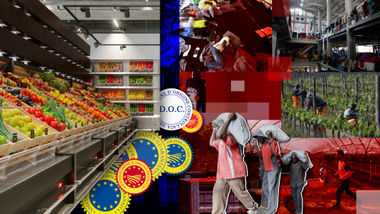 Under a European Union grant, Blanca Garcés, senior research fellow at the Barcelona Center for International Affairs (CIDOB), has prepared an extensive report about the living and working conditions of agricultural migrant workers in four European countries (Italy, Poland, Spain, and the Netherlands) and one African country (Morocco).
Labor of Migrant Workers in Agriculture The Cases of Five Entirely Different Countries
Under a European Union grant, Blanca Garcés, senior research fellow at the Barcelona Center for International Affairs (CIDOB), has prepared an extensive report about the living and working conditions of agricultural migrant workers in four European countries (Italy, Poland, Spain, and the Netherlands) and one African country (Morocco).
Labor of Migrant Workers in Agriculture The Cases of Five Entirely Different Countries
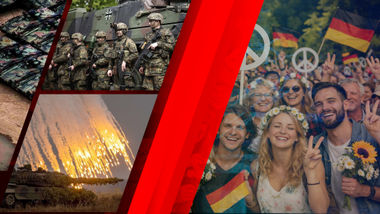 Germany has embarked on a large-scale rearmament program. Under the program, the country’s military expenses may already exceed EUR 108 billion in 2026 and reach a record EUR 150 billion by 2029. As Valeria Campari writes in the online journal of the Italian Institute of International Affairs (Istituto Affari Internazionali), the German parliament has approved partial resumption of conscription.
Pacifism Gives Way to Voluntary Military Service What Does Germany Need It For?
Germany has embarked on a large-scale rearmament program. Under the program, the country’s military expenses may already exceed EUR 108 billion in 2026 and reach a record EUR 150 billion by 2029. As Valeria Campari writes in the online journal of the Italian Institute of International Affairs (Istituto Affari Internazionali), the German parliament has approved partial resumption of conscription.
Pacifism Gives Way to Voluntary Military Service What Does Germany Need It For?
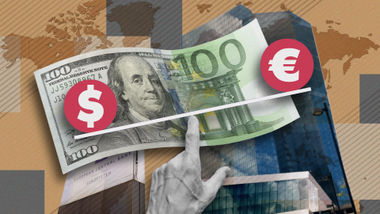 A report entitled The ECB’s bid to strengthen the euro’s global role by Spyros Andreopoulos and Sander Tordoir, former European Central Bank employees, was published on the website of the Centre for European Reform on 20 February 2026.
The ECB's bid to strengthen the euro's global role
A report entitled The ECB’s bid to strengthen the euro’s global role by Spyros Andreopoulos and Sander Tordoir, former European Central Bank employees, was published on the website of the Centre for European Reform on 20 February 2026.
The ECB's bid to strengthen the euro's global role
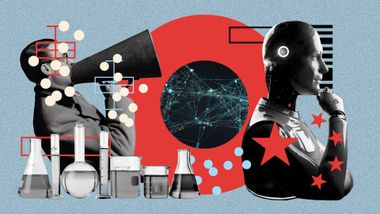 An analytical brief entitled Beijing’s next bet: Why Europeans should care about biosolutions by Janka Oertel, director of the Asia Program at the European Council on Foreign Relations (ECFR), records that Europe is losing ground in the strategic biosolutions sector. With China seeking a global leadership in this field, urgent steps and protectionism are indispensable if Europe is to retain its own leadership.
Confrontation Instead of Competition: ECFR Analytics on Biosolutions
An analytical brief entitled Beijing’s next bet: Why Europeans should care about biosolutions by Janka Oertel, director of the Asia Program at the European Council on Foreign Relations (ECFR), records that Europe is losing ground in the strategic biosolutions sector. With China seeking a global leadership in this field, urgent steps and protectionism are indispensable if Europe is to retain its own leadership.
Confrontation Instead of Competition: ECFR Analytics on Biosolutions
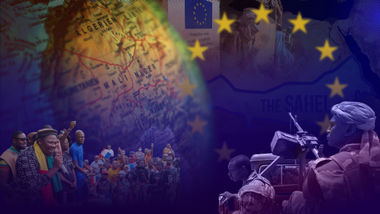 Europe risks losing its long-term influence in the Sahel. That will happen if the Old World countries fail to understand the driving forces of rising anticolonialism and to adapt their approaches in Africa to the new realities.
Europe Risks Losing the Sahel Unless It Comes to Understand It (As Exemplified by Mali)
Europe risks losing its long-term influence in the Sahel. That will happen if the Old World countries fail to understand the driving forces of rising anticolonialism and to adapt their approaches in Africa to the new realities.
Europe Risks Losing the Sahel Unless It Comes to Understand It (As Exemplified by Mali)