





Read news
Add bookmark
POPULAR
A Nuclear Button of Their Own Why Is Europe Considering Non-U.S. Nuclear Options?Labor of Migrant Workers in Agriculture The Cases of Five Entirely Different CountriesNo More Safe Places in Europe? What Is the Logic Behind French Forward Deterrence?Oil? Gas? Fertilizer? Just Life.A Flimsy French Umbrella: A Belief Instead of Real ProtectionFrench Nuclear Ambitions: Loud Words vs. Strict MathsKalypso Nicolaidis: I Want a Woodstock for European PoliticsNATO’s Internal Cohesion Is Being ThreatenedThe European Union Intends to Fight Space Wars. Does the European Military Space Project Have Room for Development?From a Nuclear Umbrella, There’s Just One Step to a Nuclear Big Stick What is the Essence of France’s Nuclear Proposal and How Will It Affect European Autonomy?
France has put forward perhaps the most important defense initiative in many years. The country offers its nuclear deterrence capability to several European partners at once.
The proposal is not formalized as a rupture with NATO, but it does represent an important development beyond the traditional confines of the Alliance. Paris essentially intends to take over NATO’s primary role in maintaining strategic stability in Europe and use its own nuclear arsenal to enhance the country’ importance in the global security frameworks.
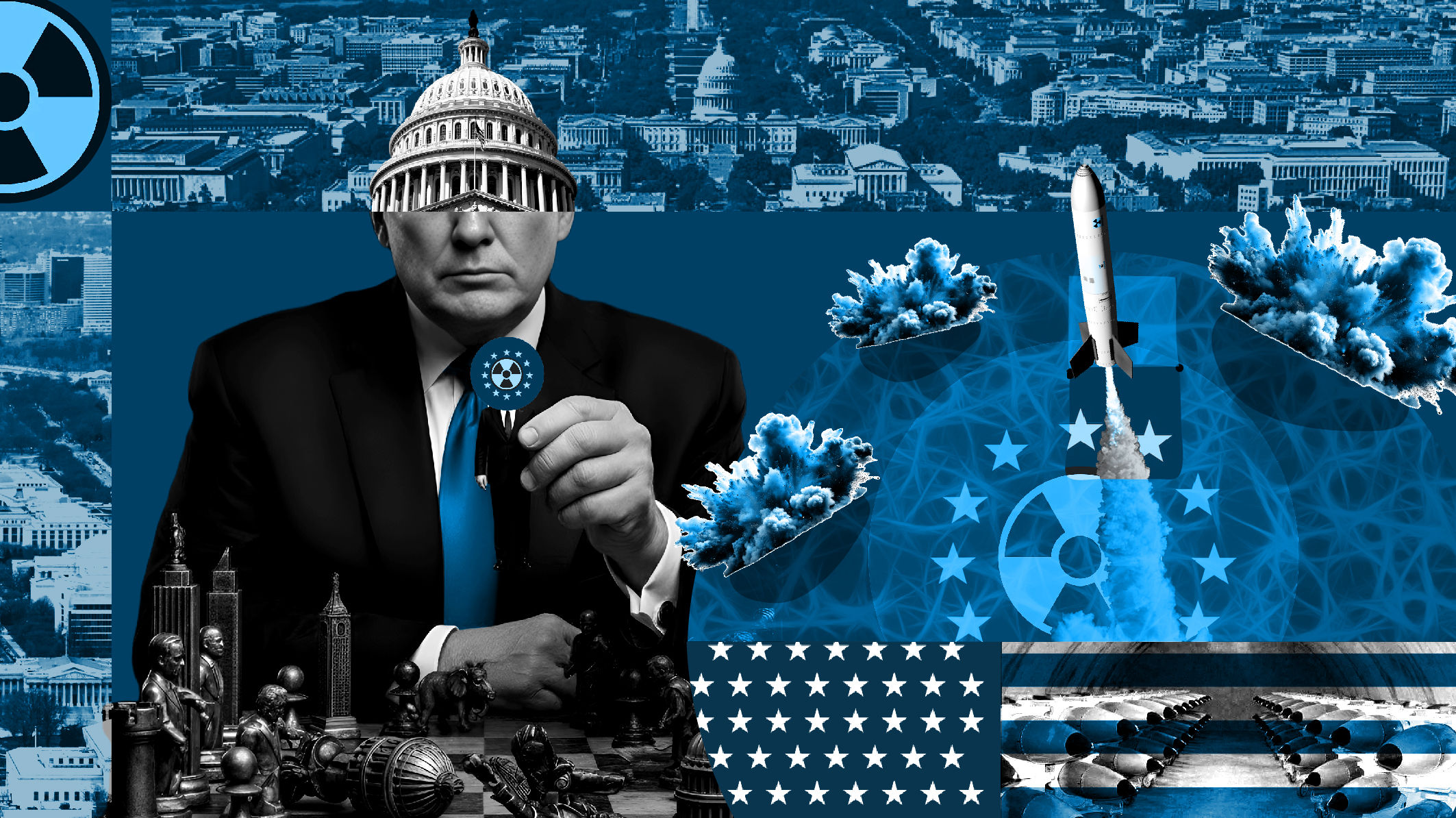
So far, seven EU countries have accepted at least a preliminary dialog with France on the advanced deterrence concept: Germany, Poland, The Netherlands, Belgium, Greece, Sweden, and Denmark. Italy and Spain appear conspicuously absent for now. France has already a separate nuclear cooperation arrangement with the United Kingdom.
The issue has been examined in detail by Domènec Ruiz Devesa, senior research fellow at the Barcelona Centre for International Affairs (CIDOB). He concludes that President Emmanuel Macron’s proposal to extend France’s nuclear deterrence to European partners constitutes a strategic turning point for all Europe.
France has declared that the security of the European continent directly affects its vital national interests. In any State’s nuclear doctrine, the definition of ‘vital interests’ determines the potential scope of deterrence. By explicitly Europeanizing this concept, Paris is broadening the strategic perimeter of its strike force.
The limits of the French proposal are quite clear. President Macron has ruled out any allied participation in planning, implementation, or decision-making concerning the use of the French nuclear arsenal. Official Paris will have the first and last word here. The State’s armed forces will remain under strict national command and control. There will be no joint nuclear ‘button’, no shared operational command, and no multinational nuclear force.
Paradoxically, such oblique enslavement is not without advantages for partner States. They would gain political reassurance and strategic consultation – rather than a codified, treaty-based nuclear commitment.
The key political question now is whether member States are prepared to accept and integrate this proposal within the broader framework of the European Union. The proposed Europeanization of the French nuclear deterrence cannot reasonably stop at consultation and deployment. In the medium term, it must address the possibility of financial contributions to the French nuclear program and therefore democratic governance and, ultimately, a European framework of accountability.
There is an apparent paradox at the heart of the French initiative. It strengthens nuclear deterrence at a time when the ultimate objective remains a world without nuclear weapons, as Macron also stated in his speech as he offered Europe his new form of nuclear deterrence.
The long-term aspiration remains nuclear disarmament, potentially within a more federalized European and global order. But that will be later, and for now Europe is making the rest of Europe accept its offer, illogical as it is: ‘To disarm later, we must get armed now’, – and trying to impose its own will on the continent. For there is just one step from a nuclear ‘umbrella’ to a nuclear ‘big stick’.